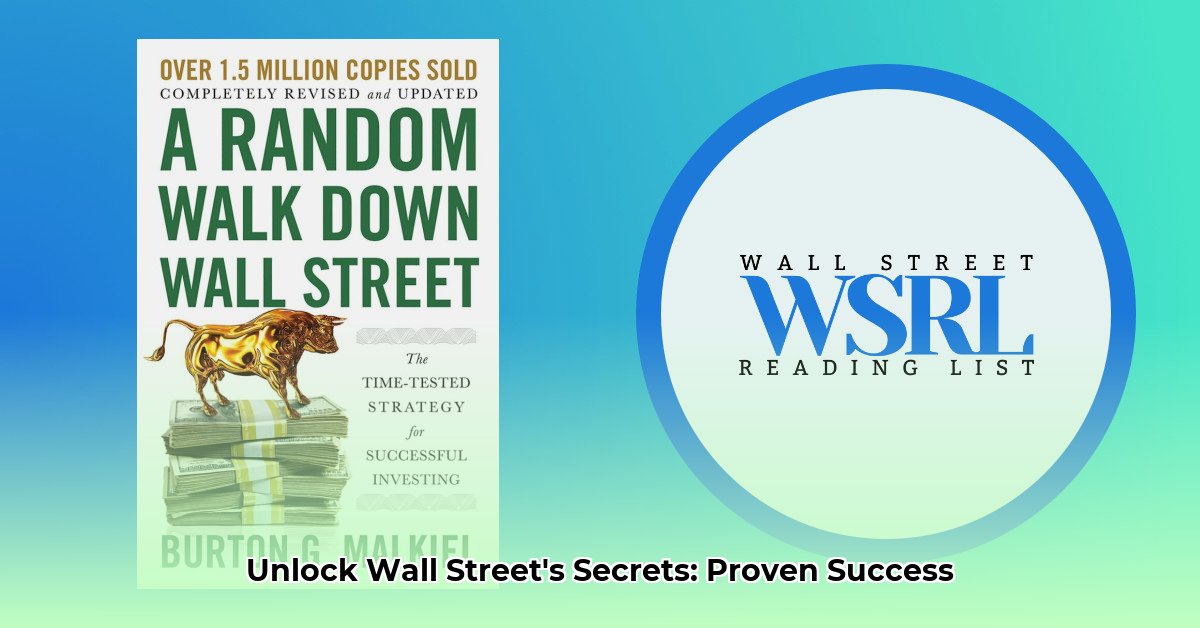
A Random Walk Down Wall Street: Unpacking Malkiel's Timeless Investing Advice
Burton Malkiel's A Random Walk Down Wall Street remains a cornerstone of investment wisdom, offering a surprisingly simple yet powerful approach to wealth building. The book's central message challenges the notion that consistently beating the market is the norm, instead proposing a low-effort, effective strategy for long-term success. This article will dissect Malkiel's core principles, using real-world examples and modern applications to guide you toward building lasting financial stability.
The Power of Passive Investing: Why Simplicity Often Wins
Malkiel champions passive investing, a strategy of diversifying investments across various assets rather than attempting to time the market. Instead of chasing individual stocks, index funds and ETFs (exchange-traded funds) provide broad market exposure, significantly reducing risk. This approach, akin to building a strong foundation instead of a single, precarious tower, mitigates the impact of individual asset underperformance. But how does this compare to active investing? Studies have consistently shown that, over the long term, passive investing strategies often outperform actively managed funds.
Diversification: Spreading Risk Across Your Portfolio
Diversification is the bedrock of Malkiel's strategy; don't put all your eggs in one basket. Imagine investing solely in one company only to see its stock plummet – a painful experience many investors have learned from. Diversification, by spreading investments across diverse asset classes (stocks, bonds, real estate, etc.), reduces the overall impact of any single asset's poor performance. This strategy is crucial for cushioning against market volatility and maintaining a steady long-term growth trajectory. What’s the ideal mix for your portfolio? That depends on your risk tolerance and time horizon. Younger investors typically have a higher risk tolerance and can allocate more to stocks.
The Long Game: Patience and Perseverance in Investing
Malkiel stresses the importance of a long-term perspective. Short-term market fluctuations are often inconsequential in the broader scheme of long-term wealth creation. Focusing on the long game, weathering short-term market volatility, and resisting emotional decision-making are critical for success. "Time in the market beats timing the market" is a common adage for a reason, and Malkiel's book underscores this truth. Isn't it fascinating how a long-term approach can counteract short-term market anxieties?
Modernizing Malkiel's Wisdom: Leveraging New Investment Tools
While A Random Walk Down Wall Street was published decades ago, its core principles remain strikingly relevant. However, the investment landscape has evolved; low-cost index funds and ETFs are now more accessible than ever. Robo-advisors further simplify passive investing through automated portfolio management. These advancements make Malkiel's principles easier to implement than ever before. But do these tools eliminate the need for personal research? No. Always understand the associated fees and avoid schemes that sound too good to be true.
Practical Guide to Implementing Malkiel's Strategy
Assess Your Risk Tolerance: How much potential loss can you comfortably handle?
Define Your Time Horizon: How long will you invest your money?
Determine Asset Allocation: Find your ideal mix of stocks, bonds, and other assets.
Choose Low-Cost Index Funds/ETFs: Minimize fees to maximize long-term returns.
Regularly Rebalance Your Portfolio: Periodically adjust your portfolio to maintain your desired asset allocation.
Exercise Discipline: Stick to your strategy regardless of short-term market fluctuations.
Key Takeaways from A Random Walk Down Wall Street:
- Passive investing often outperforms active management over time.
- Diversification is crucial for risk mitigation.
- Long-term perspective is key to long-term success.
- Low-cost index funds and ETFs are powerful tools.
- Discipline and patience are more important than market-timing skills.
Investing is a marathon, not a sprint. By embracing the simplicity of passive investing and adhering to a disciplined approach, you significantly increase your odds of achieving your financial goals. However, remember that continuous learning and adaptation to the changing market landscape are necessary for sustained success. Using Malkiel's principles as a guide coupled with proactive steps enables you to navigate your investment successfully.